
Xemantic AI Workshops
Invitation
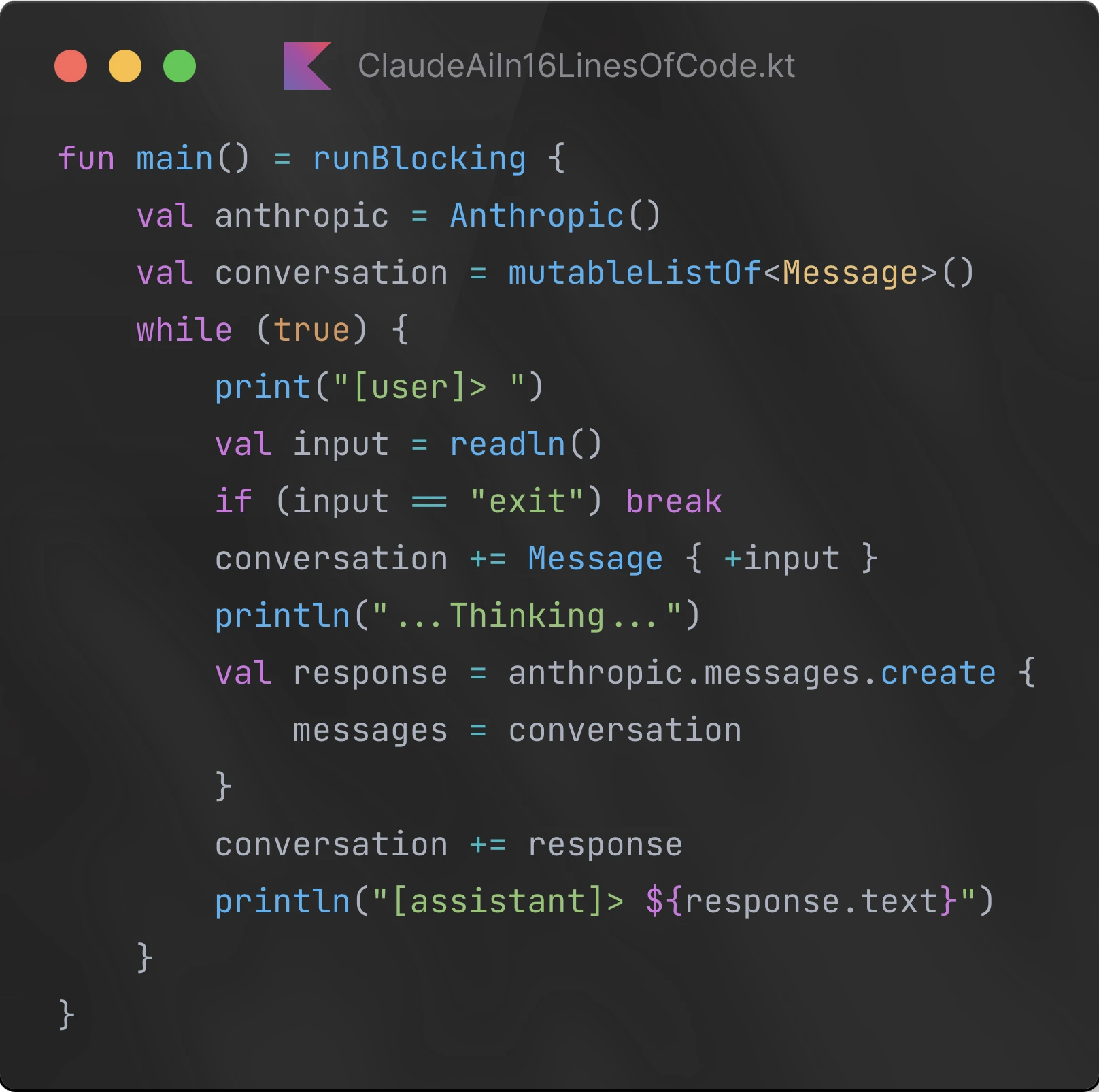
Do you want to build your own ChatGPT, Claude Code or OpenClaw?
But why would you build these tools if you can just use them? Learning simple yet powerful patterns of context and harness engineering lets you:
- use any existing agentic AI tools to full extent by understanding their internal mechanics
- augment your projects with a machine-reasoning layer
- autonomously conduct parts of your scientific research
We are Xemantic, offering intensive one-day workshops and buildathons on building powerful AI agents. Your instructor, Kazik Pogoda, will take you on a journey of developing autonomous and highly capable AI systems, like Claudine (older sister of Claude Code) and Golem XIV (a metacognitive AI system with knowledge-graph memory and self-directed research).
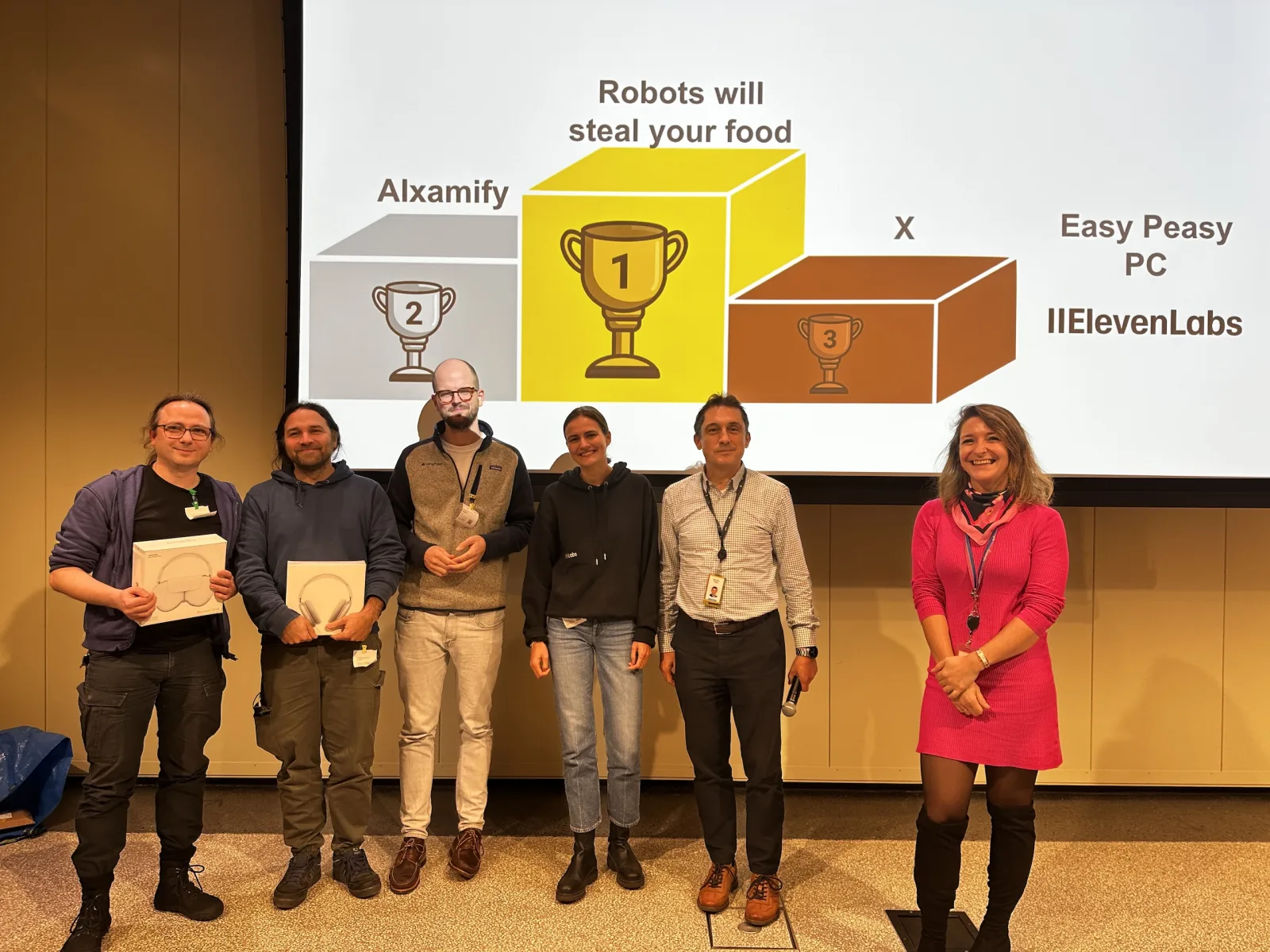
Since 2025, Xemantic has trained more than a hundred people — individuals as well as whole organizations — in the arcane of Agentic AI, with applications in scientific research, creative technologies, management, and beyond, while winning AI Hack Berlin 2024 at Google (with “Robots will steal your food” project) and mentoring the Agentic AI track at the Berlin Bio × AI Hackathon.
Workshop Editions
We currently offer three editions, sharing a common core curriculum but tailored to different audiences.
Bootstrapping Research Agents — Hands-On for Scientists
A new edition organized in collaboration with the Foresight Institute, tailored to researchers and scientists. Focuses on building agents that assist scientific work — parsing literature, extracting structured data from papers, and connecting to research sources. Held at the Foresight Institute’s Berlin AI Node, part of the AI for Science & Safety programme.
Registration via the dedicated lu.ma page.
Hands-On Agentic AI for Tech Teams
Tailored to tech teams at startups and established companies — software developers and data scientists benefit most, but only minimal programming skills are required, making it accessible to colleagues from management, product, and other functions. Can be held either at your organization’s premises or at Prachtsaal.
Agentic AI & Creative Coding
Our edition for developers, artists, and creative technologists. Examples are illustrated using the OPENRNDR creative coding framework, making agentic concepts tangible through visual, generative work. Held at Prachtsaal in Berlin’s Neukölln district.
Happy Customers
Organizations whose teams we’ve trained:
“Thank you for having us at Pratchsaal! The workshop you prepared for us was very insightful 💡 we’re already brainstorming multiple ideas how to incorporate AI agents in the dvlp.energy platform! I’m excited about how this technology could improve our product and day-to-day workflow.”
– Oliwia Golec, Co-founder & CTO @ dvlp.energy
What You Will Learn
- Master the essential glossary of AI development terms
- Build custom conversational bots using the Anthropic API as a foundation for agent development
- Design and engineer prompts for agents, moving beyond simple conversational AI — natural language becomes your new programming paradigm
- Extract structured output from unstructured sources through model parsing (e.g. documents, images)
- Give tools to your agent (function calling), so it can interact with your machine
- How to integrate an agent with IT systems of your organization (discussion with examples)
- How to assist Claudine agent in using your computer and autonomous coding - where traditional roles of human and machine are reversed.
- Understand the architecture and meta-principles of powerful AI agents
- Navigate AI ethics, privacy, security, and alignment considerations
You’ll gain access to a tailored workshop repository featuring approachable, well-documented examples and blueprints. Examples are provided in Python, TypeScript, and Kotlin — since the meta-principles of agent design are language-agnostic, you can evaluate them across all three in parallel.
For the Creative Coding edition, examples are additionally illustrated using the OPENRNDR creative coding framework, to which we are contributors.
Direct discussions
Jump into the Xemantic Discord server to ask questions or discuss anything related to our workshops. Our community is here to help!
About Kazik, Your Instructor
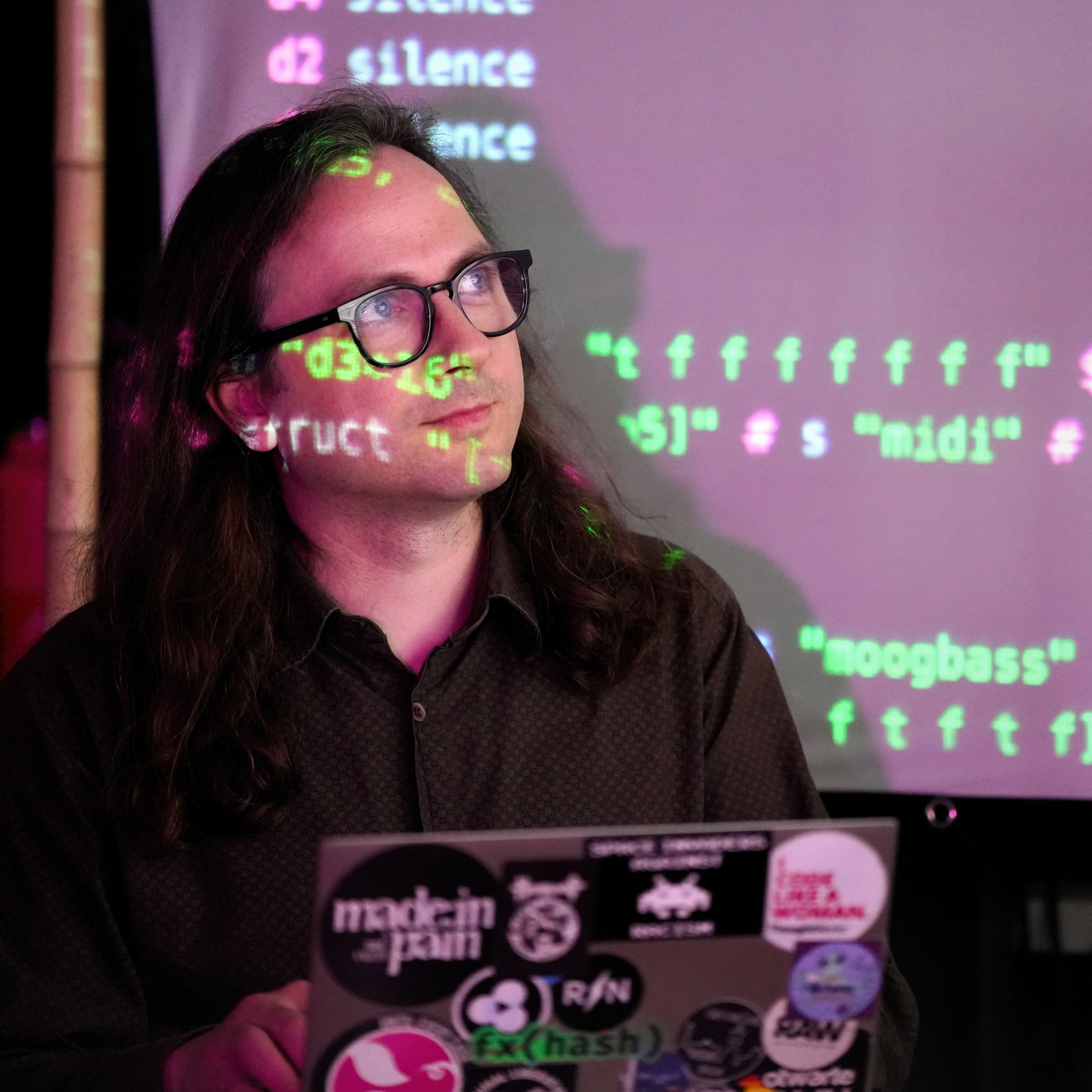
Kazik is an independent AI researcher, open source enthusiast, open society advocate, computational artist, and live coder. A programmer and software architect by trade, and a philosopher by education, he brings a longstanding interest in cognitive science and ethics. He founded Xemantic (an applied philosophy collective) and Prachtsaal (an art community), and is currently affiliated with the Foresight Institute, working at its Berlin AI Node.
As lead instructor at Xemantic, Kazik has personally trained over a hundred participants — from individual practitioners to entire organizations — in building agentic AI systems, and mentored the Agentic AI track at the Berlin Bio × AI Hackathon.
Upcoming Sessions
The workshop runs as an ongoing initiative, with new dates announced regularly. Sessions typically run from 10:00 to 17:00.
For the latest schedule and to register, contact us at loading…, or subscribe to our newsletter to be notified of upcoming editions.
We can also arrange alternative dates and on-site sessions for larger groups.
Locations
Foresight Institute - Berlin AI Node
Workshops held in collaboration with the Foresight Institute will be hosted at CIC Berlin.
Prachtsaal
Our past workshops have been taking place at Prachtsaal, a vibrant non-profit art community in Berlin’s Neukölln district. As home to many resident artists, including our Xemantic collective, it offers a unique and inspiring learning environment.
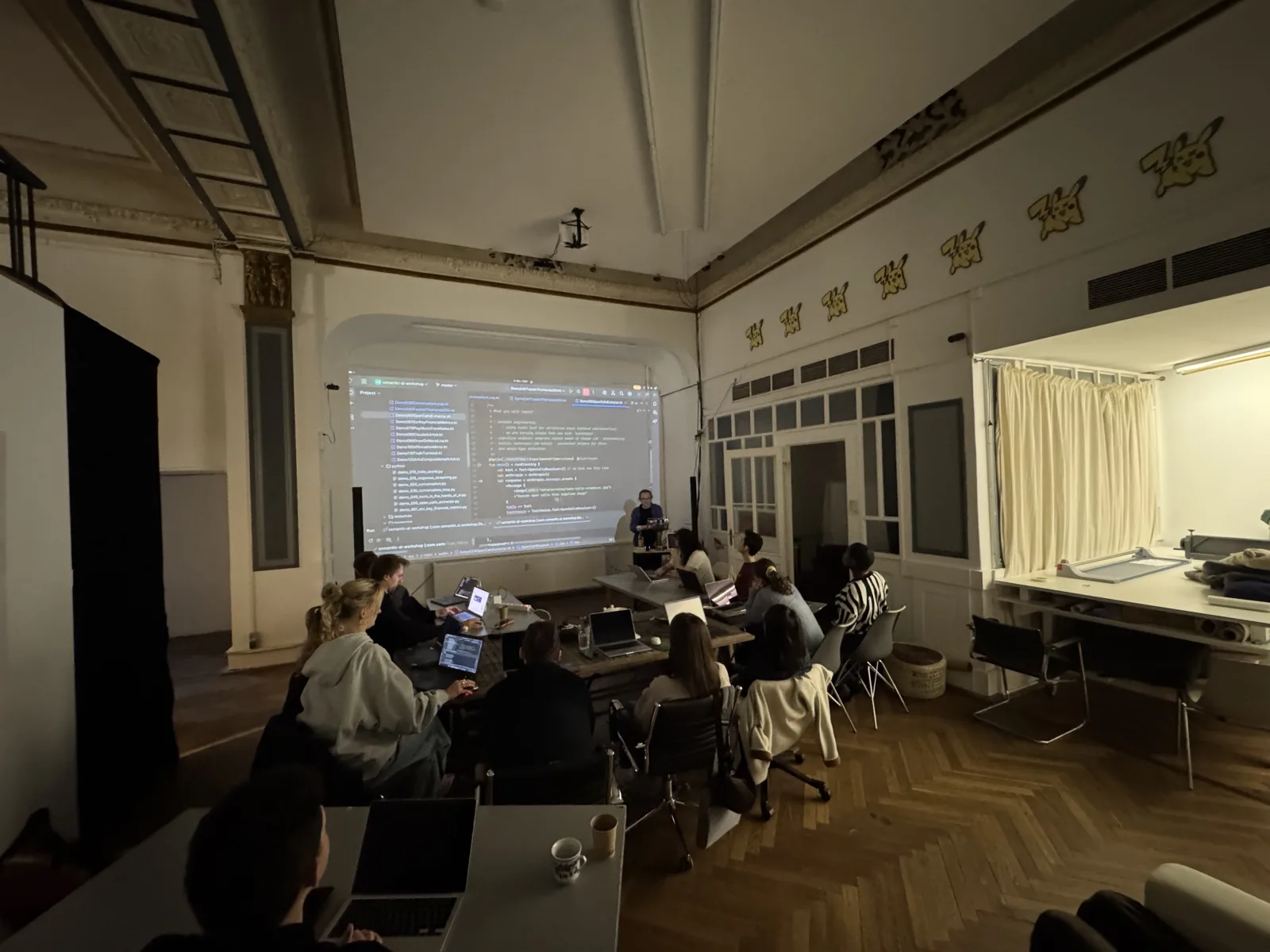
Venue Highlights
- Located between Körnerpark and Tempelhof
- Workshop space in our main venue
- Art exhibition in the foyer
- Garden area for breaks
- Opportunities to meet resident artists and view their work
- Café Augusta directly in front of the building, plus many restaurants and cafés within walking distance
Address
Prachtsaal Jonasstraße 22 12053 BerlinTechnical Requirements
Laptop Requirements (Recommended)
While you can attend the workshop as a lecture-style participant, bringing a laptop is highly recommended for hands-on practice. You may work individually or pair with another participant.
Your laptop should meet these specifications:
- Minimum 8GB RAM
- 4GB free disk space
- Any modern CPU (minimal local processing required)
All examples will be demonstrated on screen and explained thoroughly.
Anthropic API Access
You’ll need an Anthropic API key to participate in the hands-on exercises:
- Visit the Anthropic billing console
- Add a minimum of $5 credit (sufficient for the entire workshop)
Important: Anthropic API credits are separate from Claude.ai subscriptions. You’ll need API credits specifically.
Code of Conduct
Our workshop adheres to the Berlin Code of Conduct, and we are committed to providing a friendly, safe and welcoming environment for all, regardless of gender, sexual orientation, ability, ethnicity, socioeconomic status and religion (or lack thereof).
Frequently Asked Questions
What level of programming experience is required?
Our workshop is designed to be accessible to developers of all skill levels. The key requirements are:
- Basic programming concepts understanding (Python, JavaScript, TypeScript, Swift, Java, Scala, Rust, C, C++, etc.)
- Ability to express ideas in natural language
- Willingness to learn and experiment
The workshop repository features self-explanatory examples in Python, TypeScript, and Kotlin, following a “clone, modify, play” approach. Natural language skills are more crucial than advanced programming expertise for this workshop — since the meta-principles of agent design are language-agnostic, you can pick whichever language you’re most comfortable with, or compare across all three.
An optional Kotlin crash course can be provided, if you’re new to Kotlin or want to explore Xemantic’s Kotlin-based AI libraries.
Do you offer on-site corporate workshops?
Yes! We can deliver the workshop at your company location.
- For organizers: Contact us directly at loading…
- For employees: Share our workshop page (https://xemantic.com/ai/workshops) with your team leader or HR department
Is it possible to take part in the workshop remotely?
We are working on that. Depending on popularity, we might also consider a pre-recorded version of the workshop published on YouTube.
Why does Xemantic build AI tools in Kotlin?
While our workshop examples are available in Python, TypeScript, and Kotlin, Xemantic’s own AI tooling is built primarily in Kotlin. Kotlin offers unique and powerful language features, making the code read almost like a natural language, while being fully executable with outstanding IDE support. Kotlin code can be also compiled to multiple targets, including web, mobile, and native platforms.
While Kotlin AI libraries are currently limited, we’re actively working to expand the ecosystem.